Stellenbosch University Arts & Social Sciences

Reimagining a Campus Landmark
Stellenbosch University Arts & Social Sciences
Stellenbosch, Western Cape
Façade Upgrade & Public Realm Renewal [2158m²]
Introduction
Our competition entry for Stellenbosch University’s Arts & Social Sciences Building reimagines one of the campus’s key academic hubs as a sustainable and inclusive landmark. Built in 1974 on the prominent Ryneveld Street and Merriman Avenue corner, the building serves thousands of students with its lecture halls, seminar rooms, and common spaces.
The proposal upgrades the façades and public realm to improve comfort, accessibility, and campus identity, while honouring the site’s rich social and historical context. The design balances functionality with architectural distinction to create a lasting asset for the university.
A Contemporary Academic Hub
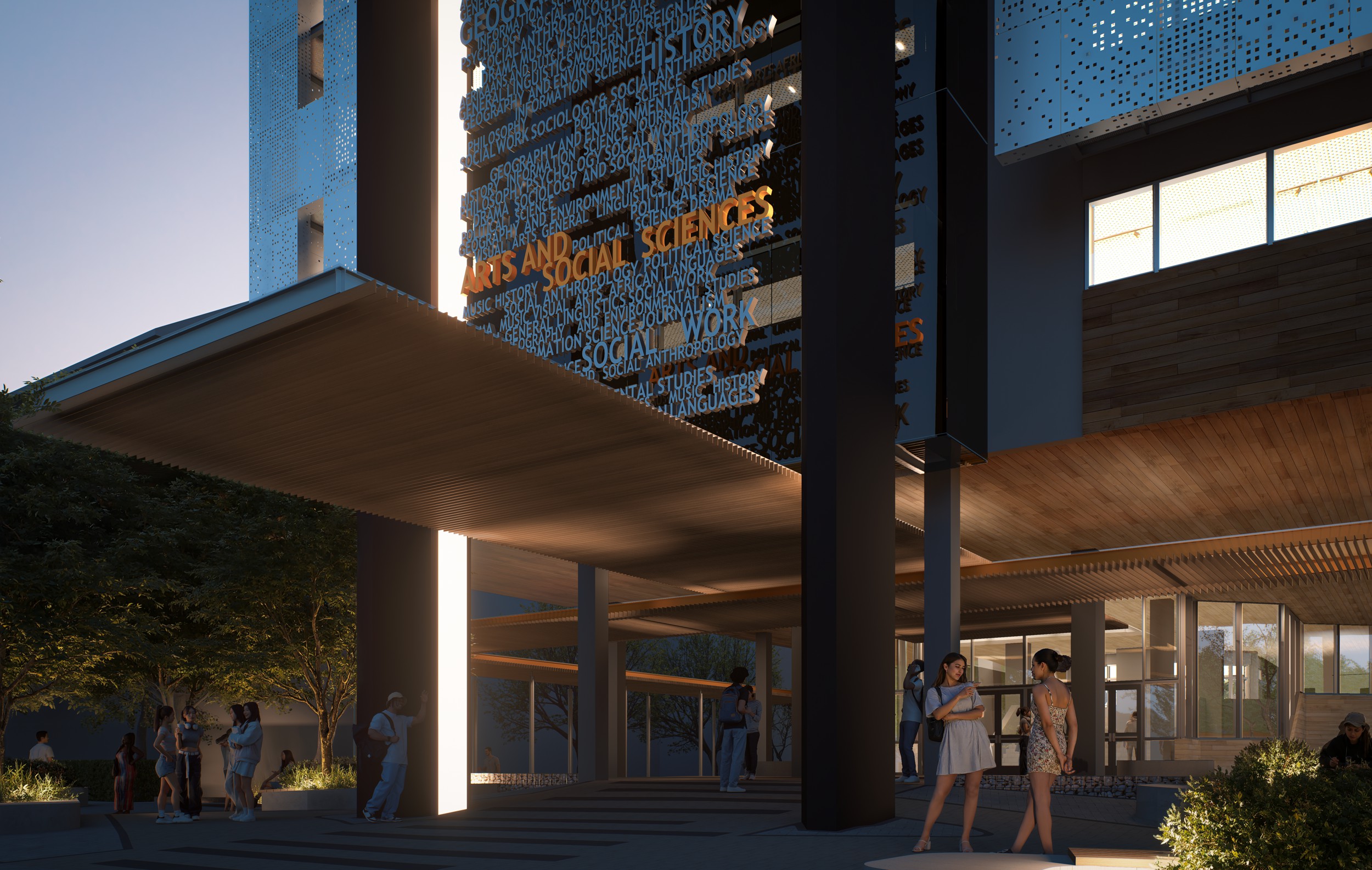
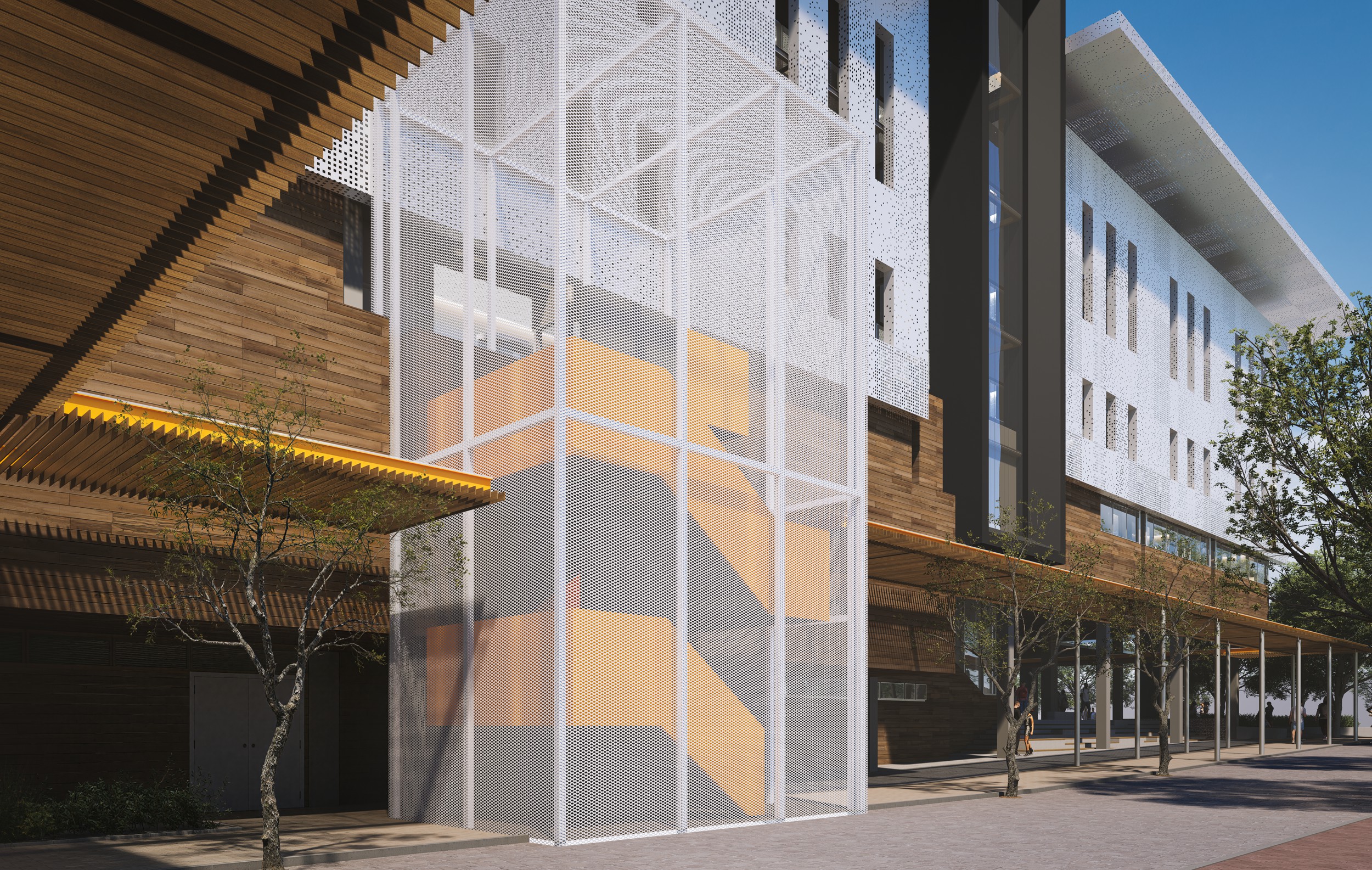
Our concept sees the building as more than shelter—it should shape academic and social life. To address solar heat on the north, east, and west façades, we introduced performance glazing, solar screens, and passive cooling strategies to improve comfort and reduce energy use.
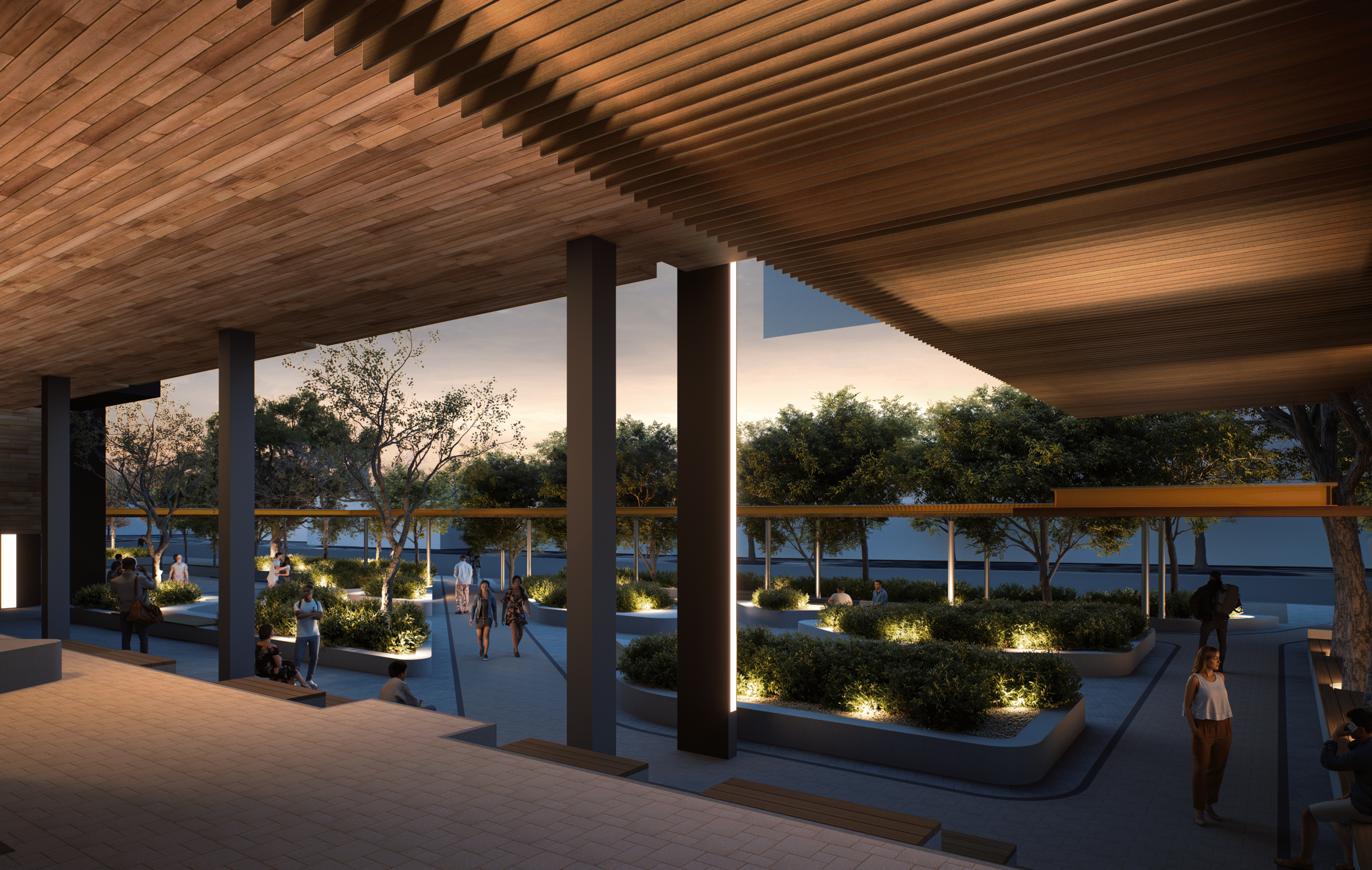
Outside, the design adds terraces, shaded gathering areas, and landscaped walkways that link with nearby facilities. The former parking courtyard is reimagined as a green, vibrant space for interaction and collaboration.
Contextual Sensitivity
A key aim was to reflect Stellenbosch University’s vision of excellence, inclusivity, and transformation. The design acknowledges the site’s history, including its ties to forced relocations under the Group Areas Act, through cues of memory and renewal. Heritage indicators guided a respectful yet forward-looking approach.
The façades use rhythm, scale, and materials that connect with the campus, while introducing a bold, contemporary identity. Locally sourced, low-carbon materials further ground the project in its Western Cape context.
Design Highlights
- Thermal Comfort & Energy Efficiency: Installation of solar screens, performance glass, and optimised shading strategies.
- Façade Renewal: Comprehensive repair, repainting, and waterproofing of all façades with modern yet durable finishes.
- Public Realm Activation: Transformation of the courtyard into a landscaped, pedestrian-friendly commons anchored by mature oaks and Ficus trees.
- Inclusivity & Accessibility: Integration of universal access standards, sensory-friendly spaces, and community-driven design gestures.
- Sustainability: Adoption of passive climate control strategies, lifecycle efficiency, and locally sourced materials to minimise environmental impact.